Department of Psychology-Undergraduate Program
Undergraduate Program
Message from the Program Leader
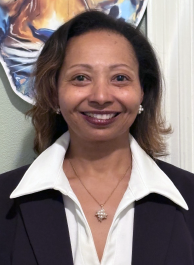
On behalf of the Department of Psychology, I would like to personally welcome you to Southern University and A&M College and the Bachelor of Science in Psychology program. Our program is committed to preparing students to compete in a global society while addressing human needs locally, nationally, and internationally through research, service, and community engagement.
The Psychology major provides students with a strong foundation in the scientific study of human behavior and mental processes across the major areas of psychology. Through teaching, research, and applied experiences, the Department of Psychology guides students in developing the knowledge, skills, and critical thinking necessary to become ethical professionals, engaged citizens, and lifelong learners prepared for graduate study and diverse career opportunities.
Mission Statement
The mission of the Department of Psychology is to prepare students to compete in a global society while addressing human needs through research and service at the local, national, and international levels. We are committed to promoting mental health and well-being, fostering intellectual and scientific inquiry, and preparing graduates to become ethical professionals, engaged citizens, and lifelong learners equipped to make meaningful contributions to their communities and professions.
Programs and Degrees Offered
The Department of Psychology offers both a traditional, on-campus program and an online Bachelor of Science (B.S.) in Psychology, providing students with a strong foundation in the scientific study of behavior and mental processes. The program prepares graduates for careers in human services and related fields, while also providing excellent preparation for graduate and professional study. The curriculum includes four courses in substance abuse studies that satisfy the academic requirements for eligibility to sit for the Substance Abuse Counselor certification examination upon graduation.
The department fosters student engagement, leadership, and academic success through a variety of organizations and support initiatives. Students may participate in the Psychology Club, which promotes leadership, service, professional networking, and career exploration; SUBR Active Minds, which advocates for mental health awareness and psychological well-being; WEUSI (Mental Health Club), which promotes mental health education, advocacy, and community engagement; Stat Phi Stat, a peer tutoring initiative that strengthens quantitative reasoning, statistics, and research methods skills; and Psi Chi, the International Honor Society in Psychology, which recognizes academic excellence and encourages scholarship, leadership, research, and professional development.
Curriculum
Curriculum for Every Degree Concentration
DEGREE REQUIREMENTS
The Bachelor of Science in Psychology is awarded to students who have satisfactorily completed the following requirements:
- All University general education
- All general education requirements in the Nelson Mandela College of Government and Social Sciences
- Forty-five hours in psychology courses, including 15 hours of psychology electives. The required psychology courses are General Psychology PSYC 210, Elementary Statistics PSYC 274, Advanced Statistics PSYC 277, Field Experience PSYC 303, Psychological Testing PSYC 360, Physiological Psychology PSYC 377, Experimental Psychology PSYC 412, Abnormal Psychology PSYC 468, Psychology of Learning PSYC 482 and History and Systems PSYC Fifteen hours of subject matter courses may be selected from courses numbered 300 and above in consultation with the academic advisor.
A minor in psychology requires a minimum of 21 hours of subject matter courses to include General Psychology, Elementary Statistics, and Abnormal Psychology. The remaining 12 hours required for the minor should be selected in consultation with an advisor in the Department of Psychology and approved by the departmental chair.
BACHELOR OF SCIENCE PSYSCHOLOGY
COURSE, RUBRICS AND CREDIT HOURS FORTHCOMING
*ELECTIVES
Interpersonal Communication PSYC 310 3
African-American Experience PSYC 315 3
Psyc of African-American Child PSYC 323 3
Intro. To Studies of Alcohol PSYC 325 3
Substance Abuse & Human Behavior PSYC 330 3
Therapeutic Appr. To Sub. Abuse Treatment PSYC 335 3
Social Psychology PSYC 342 3
Industrial Psychology PSYC 350 3
Psychology of Sexuality PSYC 370 3
Sensation & Perception PSYC 377 3
Prevention Professional Seminar PSYC 420 3
Tobacco Prevention Seminar PSYC 430 3
Psychology of Personality PSYC 431 3
Clinical Aspects of Addiction PSYC 432 3
Developmental Psychology PSYC 445 3
Applied Behavior Analysis PSYC 485 3
Special Problems PSYC 490/492/494 3
*15 HOURS REQUIRED FROM THE ABOVE ELECTIVES
Addendum to Curriculum Sheet
Nelson Mandela College of Government and Social Sciences Requirements Concentration: Psychology
******************
DO NOT SUBSTITUTE A COURSE WITHOUT CLARIFICATION FROM NELSON MANDELA COLLEGE OF GOVERNMENT AND SOCIAL SCIENCES TRANSFER STUDENTS NEED TRANSFER ARTICULATION FORMS.
************
English .................................................................... 9 hours
ENGL 110 AND 11l plus three hours of literature to be selected from ENGL 201, 202, 203, 204, 205.
Arts......................................................................... 3 hours
To be selected from ART 200, MUSC 200, OR MUSC 353.
Science.................................................................... 10 hours
The student must take a minimum of 10 hours of natural sciences, both physical and biological. A one semester (one hour) lab experience must be included in the 10 hours requirement. The selection must be made from but not limited to the courses listed below. Biology 104 & 106 and 105 and 107; Chemistry 108 & 128; 109 & 129; 110 & 130; 111 & 131; 1112 & 132; and 113 & 133; Physics 101, 102, 141, 142, 201, 202, 221, & 222. Consult with your assigned advisor for approval of other natural sciences.
Math (6 hours, MATH 130, MATH 131, OR above with approval from assigned advisor)
MATH 204 IS NOT ACCEPTABLE.
MATH 274 CAN NOT BE USED AS A SUBSTITUTE FOR PSYC 274.
Humanities................................................................... 9 hours
Nine (9) hours that include a two-semester 6-hours in History chosen from HIST 104-105, 114-115, or a higher level. Three (3) additional hours must be selected from: PHIL 200, 210, or HUMN 241, 242, 244, 366.
Social Science................................................................ 6 hours
ECON 200 or 205; GEOG 210 or 221; POLS 200 or 210, SOCL 210
Foreign Language ......................................................... 6 hours
(In the same language)
Computer Literacy (CMPS 105 or CMPS 290) ....................... 3 hours
Health or Physical Education ............................................... 2 hours
HLTH 110/210 OR 2 hours of PE activity courses
In addition to the college requirements, students must complete Service Learning, an African-American Experience elective, the Writing Proficiency, and the Departmental Comprehensive Examination. PSYC 315 (African American Experience) or PSYC 323 (African American Child) IS NOT ACCEPTABLE as an African-American Experience elective for psychology majors. For further details, consult the section on University General Education requirements in the catalog.
Courses Offered and Descriptions
PSYCHOLOGY COURSE DESCRIPTION(S)
- GENERAL PSYCHOLOGY (Credit, 3 hours). An introduction to psychology emphasizing various approaches and perspectives to understanding behavior. Topics covered include biological foundations of behavior, learning and memory, psychological tests, motivation; health psychology, psychopathology, social foundations of behavior, and personality.
- ELEMENTARY STATISTICS (Credit, 3 hours). An introduction to basic descriptive statistics, mathematical concepts, and computer applications—Statistical Package for the Social Sciences (SPSS)—is commonly used in statistics. Emphasis is placed on frequency distributions and percentiles, measures of central tendency and dispersion, standard normal distribution, and graphs and tables. Prerequisite: Math 130B or higher and SPSY 201B. Must earn a minimum grade of “C”.
- ADVANCED STATISTICS (Credit, 3 hours). An introduction to basic inferential statistics, mathematical concepts, and computer applications—Statistical Package for the Social Sciences (SPSS)—is commonly used in statistics. Topics discussed are correlations, regression and prediction, probability, hypothesis testing, and statistical inference. Emphasis is placed on parametric and nonparametric procedures. An introduction to the t-test and analysis of variance (ANOVA) techniques are topics that are included. Prerequisite: PSYC 274B.
- FIELD EXPERIENCE (Credit, 3 hours). Closely supervised practical experience in a human service-related agency, or specifically a substance abuse clinic, in which students are allowed to actively participate in the delivery of services to various populations served by that agency. Students must complete a minimum of 100 clock hours at an agency to fulfill course requirements. Pre-requisite: PSYC 468B or PSYC 445B.
- INTERPERSONAL COMMUNICATION (Credit, 3 hours). Designed to enhance interpersonal communications as related to career or professional development. Emphasis is placed on effective communication in job-seeking activities (interviews, resume writing, writing letters of application) and professional growth/ development. Highly recommended for computer science, engineering, and business majors.
- AFRICAN-AMERICAN EXPERIENCE (Credit, 3 hours). An in-depth analysis of theories and research relative to the nature of African- American psychosocial reality in modern society and throughout the diaspora. Emphasize the Afrocentric perspective and focus on such issues as: concepts of black psychology, models of black personality, black mental health, approaches to the treatment and prevention of mental disorders in African-Americans, and models of Western/ European racism. Cannot be used by psychology majors to meet the African-American experience requirement.
- PSYCHOLOGY OF THE AFRICAN-AMERICAN CHILD (Credit, 3 hours). An in- debt analysis of theories and research relative to the study of the African-American child. Examines the socio environmental factors that influence the socialization and development of African-American children in modern American society.
- INTRODUCTION TO THE STUDIES OF ALCOHOL, DRUGS, AND OTHER ADDICTIONS (Credit, 3 hours). Designed to inform students of the causes and consequences of addictions as they relate to the individual, family, and community. Students will acquire knowledge related to the types and processes of treatment planning, case management, client education, referral, and prevention. Competencies for certification in Louisiana are discussed.
- SUBSTANCE ABUSE AND HUMAN BEHAVIOR (Credit, 3 hours). Addresses issues related to repeated pathological use of drugs, including alcohol, which causes physical, psychological, economic, legal, and/or social harm to the users or to others affected by the user’s behavior. Students will also become familiar with the etiology, diagnosis, and prognosis of various addictive behaviors. Multiple perspectives will be covered, ranging from political and legal to scientific and medical to the addicts themselves.
- THERAPEUTIC APPROACHES TO SUBSTANCE ABUSE TREATMENT (Credit, 3 hours). Designed to help students develop skills required to render professional guidance to abusers of alcohol, tobacco, and other drugs. Students will be trained to assist clients in gaining insight into their addictive disorders as well as learn to overcome those behaviors to maintain a drug-free lifestyle. In addition, students will become familiar with detoxification management programs and relapse prevention.
- SOCIAL PSYCHOLOGY (Credit, 3 hours). An introduction to the study of how people’s thoughts, feelings, and actions are affected by the behavior of others.
- INDUSTRIAL/ORGANIZATIONAL PSYCHOLOGY (Credit, 3 hours). A survey course providing exposure to organizational psychology and human resource management, as well as motivational and environmental factors influencing behavior in the work setting.
- PSYCHOLOGICAL TESTING (Credit, 3 hours). An introductory survey course emphasizing the principles of psychological testing. Several psychological tests of various kinds, including substance abuse, are critically evaluated, and the importance of reliability and validity is stressed. Prerequisite: PSYC 274B.
- PSYCHOLOGY OF SEXUALITY (Credit,3 hours). A comprehensive course designed to familiarize students with aspects of sexuality, from biological factors responsible for gender development through human sexual behavior. Such topics as alterations in sexual behavior, sex roles, and contemporary issues will be covered.
- PHYSIOLOGICAL PSYCHOLOGY (Credit, 3 hours). An introduction to the relationship between human behavior's biological and psychological bases. Topics include basic biological and neurological processes, assessment of these processes, in-depth examination of neural and brain functioning, and how these interact with the sensory system to influence behavior—hands-on experience required.
- SENSATION AND PERCEPTION (Credit, 3 hours). An introduction to the relationship between the biological aspects of sensation and how these are integrated by living organisms into meaningful perceptual experimental studies is provided. Students learn about perceptual organization, perceptual illusions, Gestalt principles, and the neural networks responsible for our perceptual world.
- EXPERIMENTAL PSYCHOLOGY (Credit, 3 hours). An introduction to the principles of research in behavioral science. Emphasis is placed on major research strategies and statistical methods. The course focuses on issues common to experimental, correlational, and single case approaches. Prerequisite: PSYC 277B
- PREVENTION PROFESSIONAL SEMINAR (Credit, 3 hours). An introduction to the field of prevention with emphasis on substance abuse and preparation for the licensure examination for prevention professionals. A focus on the history of drug use, developmental theories that support prevention, approaches to address the problem, and the effective use of a logic model.
- TOBACCO SEMINAR (Credit, 3 hours). A review of the role of economics in tobacco’s history in the United States as well as in today’s economy. The course highlights marketing practices and political roles in tobacco regulation as they pertain to prevention.
- PSYCHOLOGY OF PERSONALITY (Credit, 3 hours). Consideration of major theoretical approaches to the study of personality, its development, understanding, and investigation.
- CLINICAL ASPECTS OF ADDICTION (Credit, 3 hours). Designed to address clinical issues related to crisis intervention such as recognizing the elements of the client crisis, implementing an immediate course of action appropriate to the crisis, and enhancing overall treatment by utilizing crisis events.
- DEVELOPMENTAL PSYCHOLOGY (Credit, 3 hours). An overview of the major developmental tasks encountered over the course of the entire life span. Major theoretical perspectives are addressed, including an examination of individual and socio-environmental factors, which influence various dimensions of human development.
- ABNORMAL PSYCHOLOGY (Credit, 3 hours). Etiology, diagnosis, and prognosis of major forms of mental illness. The course integrates major theoretical perspectives and current research in the field. Designed to familiarize students with populations they may encounter in mental health and substance abuse settings.
- PSYCHOLOGY OF LEARNING (Credit, 3 hours). The nature of the learning process, with special emphasis upon variables affecting learning, and theoretical and systematic implications of recent research.
- APPLIED BEHAVIOR ANALYSIS I (Credit, 3 hours). Course designed as a basic introduction to the principles and techniques of applied behavior analysis. Emphasis is placed on the use of these principles to solve socially significant problems.
- HISTORY AND SYSTEMS (Credit, 3 hours). This course presents a survey of modern psychology as a natural science. Traditional analyses of theoretical frames of reference to psychological phenomena will occur within a larger context of both the major Western philosophical precursors of scientific method (i.e., European empiricism) as well as philosophical systems of other cultures. Alternative “psychologies” which could or in fact have arisen from non-Eurocentric points of view will be explored.
490/491/492/494. SPECIAL PROBLEMS IN PSYCHOLOGY (Credit, 3 hours each). Designed to allow undergraduate students to work on supervised, individually-tailored projects ranging from independent research to experience in professional preparation.
- APPLIED COGNITIVE SCIENCE. This course examines cognitive science as an interdisciplinary field integrating psychology, neuroscience, and computer science to understand human thought and behavior. Students explore fundamental cognitive processes and their applications to real-world problems in areas such as education, health, and artificial intelligence.
496/497/498/499. CURRENT PROBLEMS IN PSYCHOLOGY (Credit, 3 hours each). Selected theoretical and current methodological problems in psychology.
Faculty and Staff
Chair: Jocelyn M. Freeman
Professors: Jocelyn Freeman, Reginald Rackley, and Catrice Tolbert
Associate Professor: Jaymes Durriseau
Assistant Professor: Shannon Matthews
Full-Time Instructors: Courtney Loyd and Elexis Dill Parker
Office Manager: Jeanette Dent Sanders
Contact Information
Dr. Jocelyn Freeman, Chairperson
317A Augustus C. Blanks Hall
225-771-2295
Mrs. Jeanette Dent Sanders
317 Augustus C. Blanks Hall
225-771-2990 or 225-771-2301